Modern buses operate in complex traffic environments and carry large numbers of passengers every day. For bus operators, passenger safety, driver supervision, vehicle security, and fleet efficiency are important parts of daily transportation management.
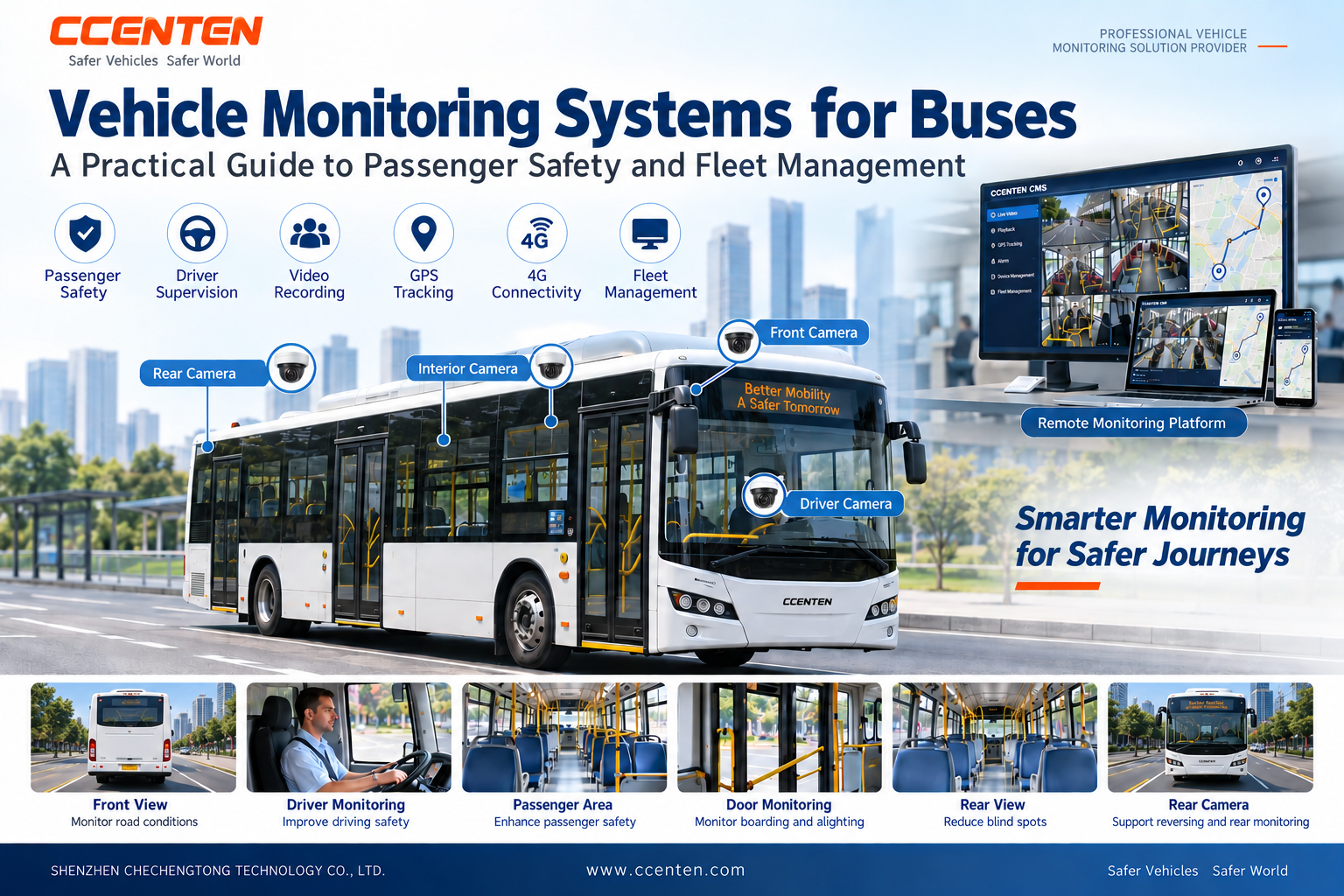
A modern vehicle monitoring system for buses combines onboard cameras, video recording, GPS tracking, cellular communication, and fleet management software. These technologies provide operators with better visibility into vehicle operations and help them review incidents more efficiently.
Unlike a basic CCTV system that only records video locally, an integrated bus monitoring system can support multiple camera views, remote video access, vehicle location tracking, event recording, and centralized fleet management.
What Is a Vehicle Monitoring System for Buses?
A vehicle monitoring system for buses is an integrated electronic solution designed to monitor the vehicle, driver, passengers, and surrounding road environment.
A typical bus monitoring system may include the following components:
- Road-facing cameras
- Interior passenger cameras
- Driver monitoring cameras
- Rear-view or reversing cameras
- Mobile DVR or MDVR
- Local video storage
- GPS positioning
- 4G or other cellular communication
- Remote fleet monitoring software
- Optional AI-based driver or road monitoring functions
The cameras capture video from different areas of the bus. The MDVR receives and records the video, while GPS and cellular communication can transmit vehicle information to a remote management platform.
Why Do Buses Need Video Monitoring?
Passenger Safety
Interior cameras help operators monitor passenger areas and review incidents such as falls, conflicts, unusual activity, or other safety-related events.
Recorded footage can provide useful information when an incident needs to be investigated or when a passenger complaint requires verification.
Driver Supervision
A driver-facing camera provides visibility into the driver's operating environment. It can help fleet managers review driver activity and investigate events related to driving operations.
When supported by the system configuration, AI-based Driver Monitoring System functions may also help identify certain driver behaviors or conditions, such as distraction or fatigue-related indicators.
Road Event Recording
A forward-facing camera records the road and traffic environment in front of the bus. This footage can be useful when reviewing sudden braking, collisions, dangerous traffic situations, or other road events.
Vehicle and Passenger Area Security
Continuous video recording provides an additional security layer for public transportation and commercial passenger vehicles.
Recorded video may support the investigation of accidents, passenger disputes, property loss, unauthorized activity, and other operational incidents.
Where Are Cameras Installed on a Bus?
Camera installation depends on the bus model, vehicle length, interior layout, number of doors, and monitoring objectives. The purpose of camera placement is to cover important areas while reducing blind spots.
Front Camera
A front-facing camera is normally installed toward the front of the vehicle to record road conditions and traffic activity.
Front-view recording can help operators review road incidents and understand the circumstances surrounding an accident or sudden driving event.
Driver Camera
A driver camera is positioned toward the driver's area. It can record the driver's operating environment and support driver supervision.
If the system includes supported AI functions, the driver camera may also be used for driver monitoring applications.
Passenger Area Cameras
Interior cameras can be installed in the passenger compartment to monitor seats, aisles, and passenger movement.
The exact number and position of cameras should be determined according to the bus interior layout and the areas that require coverage.
Door Area Cameras
Cameras positioned near entrances and exits can help monitor passenger boarding and exiting.
Door-area monitoring can be particularly useful for buses with multiple doors or high passenger turnover.
Rear Camera
A rear-facing camera provides visibility behind the bus. Depending on the system configuration, it may support rear-area monitoring, reversing assistance, or the review of events occurring behind the vehicle.
How Does a 4G MDVR Work on a Bus?
A 4G MDVR is commonly used as the central recording device in an integrated bus monitoring system.
Cameras connect to the MDVR, which receives and processes video streams from multiple channels. The MDVR can then record video locally and communicate with a remote monitoring platform through a cellular network.
Depending on the equipment and software configuration, the MDVR may support the following functions:
- Recording video from multiple cameras
- Storing video on a local storage device
- Supporting scheduled or continuous recording
- Receiving GPS positioning information
- Transmitting selected vehicle information through 4G
- Uploading alarms or event information
- Supporting remote video access and playback
This architecture allows bus operators to combine local video recording with remote fleet management. It is especially useful for vehicles operating across large service areas.
Remote Bus Fleet Monitoring
Remote fleet monitoring allows operators to manage multiple buses from a centralized platform. Instead of inspecting each vehicle individually, fleet managers can access vehicle information through one software interface.
Common remote monitoring functions may include:
- Real-time vehicle location
- GPS route tracking
- Live video viewing
- Historical video playback
- Vehicle status monitoring
- Alarm and event management
- Driver-related event review
- Fleet activity management
A cloud-based platform can be useful for bus fleets operating in different cities or regions because fleet managers can access vehicle information without being physically located near the vehicles.
To explore integrated Vehicle Monitoring Solutions for commercial vehicles and fleet applications, operators can review different system architectures according to their operational requirements.
Key Features of a Bus Monitoring System
Multi-Channel Video Recording
The monitoring system should provide enough camera channels for the required installation. The total number of cameras depends on the bus size, interior layout, number of doors, and monitoring objectives.
GPS Tracking
GPS tracking provides current or historical vehicle location information. When combined with video recording, GPS data can help operators connect recorded footage with specific routes, locations, and operating times.
4G Connectivity
4G connectivity enables communication between the bus and a remote management platform. Depending on network coverage, data plans, and system configuration, it may support remote monitoring, alarm transmission, and selected video-related functions.
Local Storage
Continuous video recording requires suitable storage capacity. Storage selection should consider the number of cameras, video resolution, frame rate, recording schedule, and required retention period.
Driver Monitoring
Driver monitoring cameras provide visibility into the driver's area. When supported by the system, AI functions may assist with monitoring certain driver behaviors or safety-related conditions.
Remote Management Platform
A remote management platform allows fleet operators to monitor vehicles, review video, manage alarms, and access operational information from a centralized interface.
Bus Monitoring System Applications
Public Transit Buses
City buses can use monitoring systems to observe passenger areas, entrances, exits, and road conditions. This can support passenger safety and operational management.
School Buses
School transportation requires attention to passenger safety, driver supervision, and incident recording. A bus monitoring system can provide video evidence and vehicle information for operational review.
Coaches and Long-Distance Buses
Long-distance buses operate for extended periods and may travel between cities or regions. GPS tracking, video recording, and remote monitoring can help operators maintain visibility across long routes.
Shuttle Buses
Airport, hotel, factory, university, and corporate shuttle buses can benefit from integrated video monitoring and fleet management functions.
Articulated Buses
Articulated buses have more complex passenger areas and multiple sections. Camera placement should consider the front section, rear section, articulation area, doors, and other important monitoring zones.
How to Choose a Vehicle Monitoring System for a Bus
Before selecting equipment, operators should define the vehicle's monitoring requirements and operating environment.
1. Bus Size and Interior Layout
The size and structure of the bus affect camera coverage, cable routing, and installation locations.
2. Required Camera Coverage
Identify the areas that need monitoring, such as the road ahead, driver area, passenger compartment, doors, and rear area.
3. Number of Camera Channels
Select an MDVR with enough channels for the planned installation and possible future expansion.
4. Video Resolution
Higher-resolution cameras can provide more image detail, but they may also require more storage capacity and network bandwidth.
5. Storage Capacity
Estimate the required recording period before selecting the storage device. Storage requirements depend on camera quantity, resolution, frame rate, recording mode, and retention time.
6. Cellular Network Compatibility
For remote monitoring, the cellular module and supported frequency bands should match the network environment in the target country or region.
7. GPS Requirements
GPS is useful for real-time vehicle tracking, route history, and connecting video events with vehicle locations.
8. AI Functions
Depending on project requirements, operators may consider driver monitoring, road-event detection, or other AI-based vehicle safety functions.
9. Fleet Management Platform
The software platform should support the required functions, including vehicle management, live viewing, video playback, GPS tracking, alarm handling, and user permissions.
What Should a Complete Bus Monitoring Solution Include?
A complete bus monitoring solution is more than a collection of cameras. It normally includes several connected layers that work together.
- Camera Layer: Captures road, driver, passenger, door, and rear-area video.
- Recording Layer: The MDVR receives, processes, and stores video from connected cameras.
- Communication Layer: 4G and GPS technologies connect the vehicle with remote management services.
- Platform Layer: Fleet operators can monitor vehicles, review video, manage alarms, and access operational information.
This integrated architecture allows video surveillance and fleet management functions to operate as one coordinated system.
Conclusion
A modern vehicle monitoring system for buses provides broader visibility than a traditional standalone CCTV system.
By combining cameras, MDVR recording, GPS positioning, cellular communication, and fleet management software, bus operators can monitor vehicles, improve passenger-area visibility, supervise driver operations, and review incidents more efficiently.
The most suitable system depends on the bus type, interior layout, required camera coverage, storage requirements, communication network, and fleet management objectives.
For a successful deployment, operators should first define the required monitoring areas and operational goals, then select the cameras, recorder, communication hardware, and management platform accordingly.
To explore integrated Vehicle Monitoring Solutions , operators can evaluate different system configurations based on their vehicle types and fleet management requirements.